


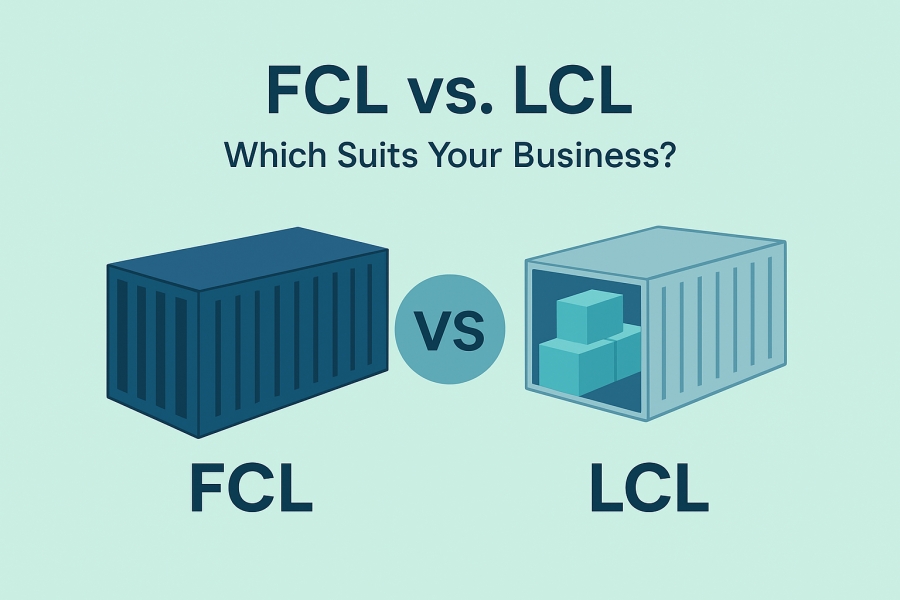
What Is FCL in Shipping?
Full Container Load (FCL) refers to a shipping method where an entire container is reserved for a single shipper’s cargo. In FCL shipping, the container is loaded with goods from one business, offering exclusivity and direct control over the shipment. This method is ideal for large shipments that can fill a standard container (e.g., 20-foot or 40-foot).
Advantages of FCL
FCL advantages are as below:
- Faster Transit Times: Exclusive use of the container often results in quicker loading, unloading, and shipping processes.
- Enhanced Security: With no shared space, the risk of damage or loss from other cargo is minimized.
- Simplified Logistics: Direct control over the container simplifies tracking and reduces handling complexities.
- Cost-Effective for Large Shipments: Ideal when shipping enough cargo to fill or nearly fill a container, avoiding shared costs.
Ideal Scenarios for LCL
FCL application are as below:
- Bulk Shipments: Perfect for businesses shipping large quantities of goods, such as manufacturers or wholesalers.
- High-Value or Sensitive Cargo: Suitable for fragile, perishable, or valuable items requiring minimal handling.
- Time-Sensitive Deliveries: Used when speed is critical, such as for seasonal products or urgent orders.
Understanding LCL: Less Than Container Load Explained
Less Than Container Load (LCL) is a shipping option where multiple shippers’ goods are consolidated into a single container. In an LCL shipment, your cargo shares space with others, making it cost-effective for smaller loads that don’t require a full container. The LCL service involves a freight forwarder combining shipments at the port, with costs split based on cargo volume or weight.
Advantages of LCL
LCL advantages are as below:
- Cost Savings for Small Loads: Pay only for the space your cargo occupies, ideal for smaller shipments.
- Flexibility: Allows businesses to ship smaller quantities without waiting to fill a full container.
- Access to Global Markets: Enables small businesses to participate in international trade affordably.
- Reduced Inventory Costs: Supports frequent, smaller shipments, helping manage inventory more efficiently.
Ideal Scenarios for LCL
LCL application are as below:
- Small Businesses or Startups: Ideal for companies with limited cargo volumes entering international markets.
- Irregular Shipments: Suits businesses with sporadic or variable shipping needs, such as seasonal retailers.
- Test Shipments: Useful for testing new markets or products with smaller, low-risk shipments.
Cost Comparison: FCL vs. LCL Shipping
When deciding between FCL and LCL, cost is often a primary factor for businesses. Understanding the difference between FCL and LCL in terms of pricing helps align your choice with your budget and shipping needs. Below, we break down the cost structures of Full Container Load (FCL) and Less Than Container Load (LCL) to clarify which method suits different business scenarios.
- FCL Cost Structure: In FCL shipping, you pay for the entire container, regardless of whether it’s fully filled. This flat rate can be cost-effective for large shipments, as it eliminates shared costs. However, for smaller loads, FCL may seem expensive since you’re paying for unused space. Additional costs may include container handling fees and port charges, but these are often predictable.
- LCL Cost Structure: With LCL service, you only pay for the space your cargo occupies, calculated by volume (cubic meters) or weight. This makes LCL shipments more affordable for smaller loads. However, additional fees for consolidation, deconsolidation, and documentation can add up, potentially increasing the overall cost for complex shipments.
Which Is More Cost-Effective?
FCL is generally better for businesses shipping enough cargo to fill at least 50-60% of a container, as it avoids per-unit costs and extra handling fees. Conversely, LCL is ideal for smaller shipments where the cost of a full container would be disproportionate. For example, a small business shipping 2-3 cubic meters of goods would find LCL and FCL shipments far more economical with LCL.
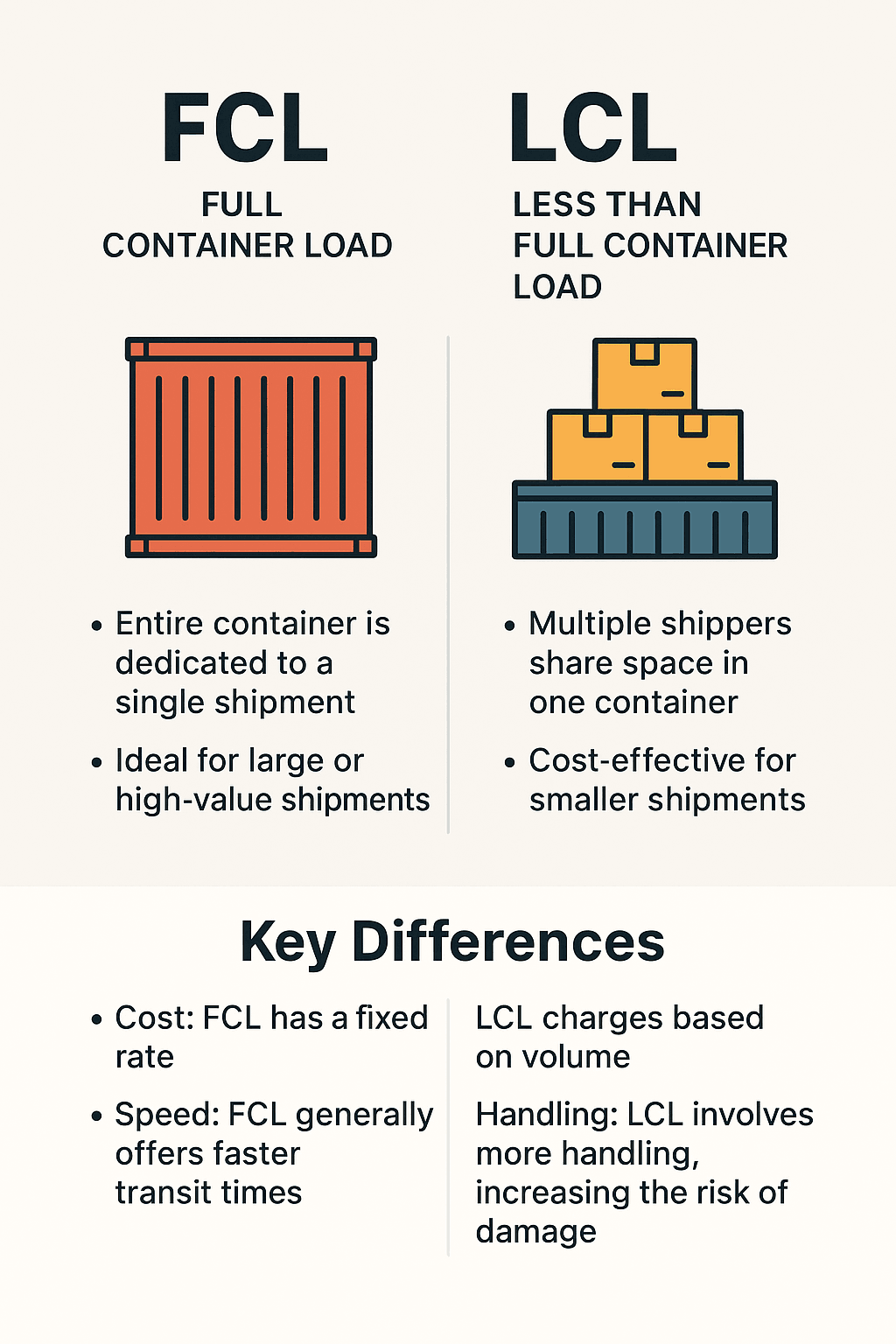
FCL vs LCL: Key Differences at a Glance
Choosing the right shipping method can significantly impact cost, speed, and cargo security. This table highlights the main differences between LCL and FCL, helping businesses quickly understand which option suits their shipment needs.
|
LCL (Less-than-Container Load( |
FCL (Full-Container Load |
Factor |
|
Space is shared with cargo from multiple shippers |
Entire container is dedicated to a single shipper |
Container usage |
|
Charges based on shipment size (cubic metres, CBM) |
Flat rate per container, regardless of fill |
Cost model |
|
Slower due to consolidation and multiple handling points |
Faster with direct routing and fewer stops |
Transit speed |
|
More handling increases exposure to damage or loss |
Container stays sealed from origin to destination, reducing risks |
Security & handling |
|
Highly flexible for small or multi-destination shipments |
Less flexible; container goes to one consignee only |
Flexibility |
|
Lower initial cost for small shipments; total cost can increase as volume grows |
Better value for large shipments; requires higher upfront investment |
Cost efficiency |
|
Small to medium shipments (<15 CBM); budget-sensitive, non-urgent, or low-risk cargo |
Large shipments (15–20 CBM+); fragile, high-value, or regulated goods |
Best suited for |
Conclusion: Aligning Your Choice with Business Goals
Selecting the right shipping method between LCL FCL Shipment hinges on your business’s specific requirements, budget, and logistics priorities. Full Container Load (FCL) is ideal for larger, time-sensitive, or high-value shipments where control and speed are paramount, while Less Than Container Load (LCL) provides a cost-effective and flexible option for smaller or irregular shipments. By carefully assessing factors like shipment size, cost, and transit time, you can choose the method that optimizes your supply chain.
At SASCO, we proudly provide both FCL and LCL services for seamless transit through Iran. Our dedicated team of expert consultants is available to offer complimentary, tailored guidance to ensure you choose the shipping method that perfectly aligns with your business objectives.
FAQ: FCL vs. LCL
Q1: Which is better, LCL or FCL?
A1: FCL is better for large shipments (faster, more secure, cost-efficient per unit). LCL suits smaller shipments (flexible and cheaper for low volumes).
Q2: What is the difference between LCL and FCL?
A2: FCL gives you a full container for your cargo only. LCL shares a container with other shipments, which can increase handling time but lowers cost for small shipments.
Q3: What does 40 FCL mean?
A3: “40 FCL” means a full 40-foot container used exclusively for your goods. It’s a standard container size in international shipping.
Q4: What is the difference between FCL and LCL freight?
FCL freight ships a full container for one customer. LCL freight consolidates multiple smaller shipments in one container. FCL is faster and safer; LCL is better for smaller loads.