

What is the International North–South Transport Corridor?
The International North–South Transport Corridor (INSTC) is a multimodal network of sea, rail, and road routes designed to connect India, Iran, Russia, and Central Asia, providing a faster, more efficient alternative to traditional maritime routes. It aims to reduce transit times, lower shipping costs, and enhance trade between South Asia, the Middle East, and Europe. Beyond logistics, the INSTC strengthens regional cooperation, promotes economic development in transit countries, and offers safer, more reliable connections for global commerce.
The History of the INSTC
The INSTC was first dreamed up in 2000 by three main countries: India, Iran, and Russia. They wanted a better way to trade with each other without depending on slower, riskier paths. Over time, more countries joined in, turning it into a team effort. Today, it includes about 13 nations working together: India, Iran, Russia, Azerbaijan, Armenia, Kazakhstan, Kyrgyzstan, Tajikistan, Turkmenistan, Turkey, Ukraine, Belarus, Oman, and Syria (with Bulgaria watching as an observer). These countries are either directly on the route or help make it work through agreements (Impriindia & moderndiplomacy).
Why the INSTC Matters Strategically
The INSTC is more than just a trade route—it’s a game-changer for regional and global commerce. By cutting transit times from 30–45 days via traditional sea routes to just 15–25 days, it reduces inventory costs and opens faster access to new markets.
It improves connectivity, enabling countries like India to trade efficiently with Russia, Europe, and Central Asia, supporting industries from manufacturing to food supply. The corridor also provides safer alternatives by bypassing high-risk areas such as the Suez Canal, lowering the chance of delays caused by conflicts or congestion.
For transit countries like Iran and Azerbaijan, the INSTC boosts economic opportunities, turning them into key trade hubs and strengthening regional partnerships. Overall, the corridor exemplifies how coordinated infrastructure and logistics can make global trade faster, safer, and more reliable.
Where Does the INSTC Start and End?
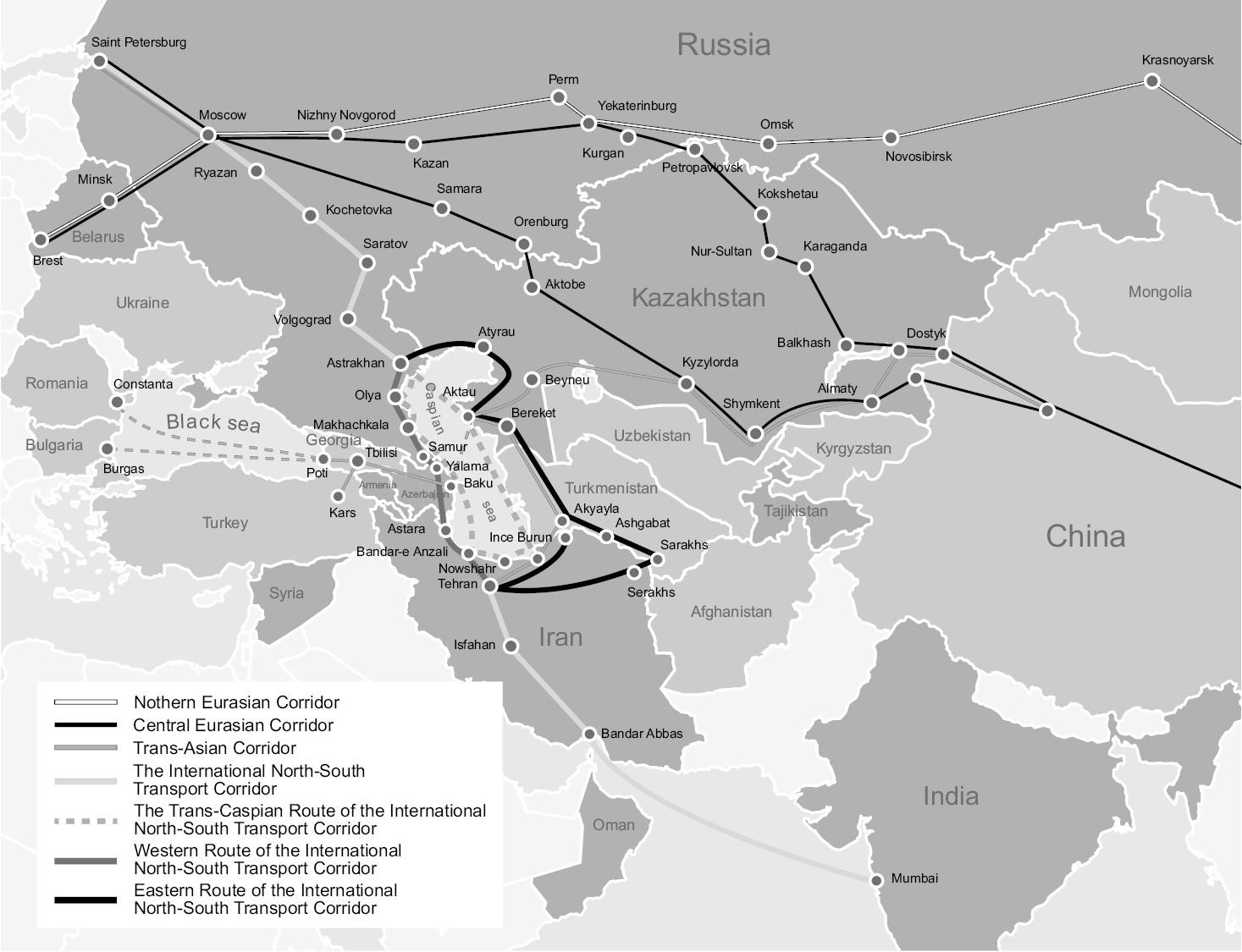
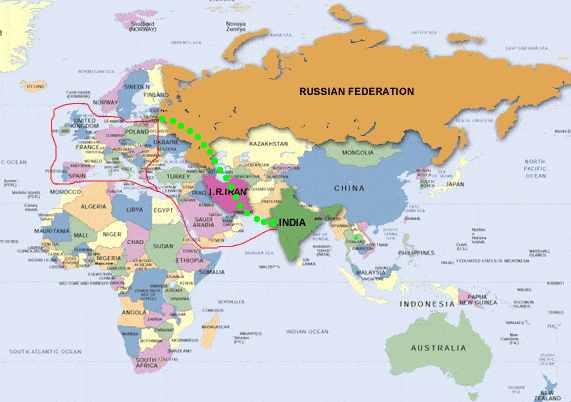
The corridor is like a north-south highway for trade, stretching over 7,200 kilometers (about 4,500 miles). It doesn't have one single "start" or "end" point because it's flexible, but the main idea is to link the Indian Ocean in the south to northern Europe in the north.
- Starting Point (South): It often begins in India, at busy ports like Mumbai (Jawaharlal Nehru Port) or sometimes Chabahar in Iran (which India helps run). Goods from India or other southern countries load onto ships here.
- Ending Point (North): It typically finishes in Russia, at places like the port of Astrakhan on the Caspian Sea or even further north to St. Petersburg near the Baltic Sea. From there, goods can spread out to Europe, like Finland or other parts of Eurasia.
In between, the route crosses land and water to connect these ends efficiently.
The Main Routes and Countries Along the INSTC
The INSTC isn't just one straight line—it's a network with a few branches, using sea, rail, and roads. Here's a simple breakdown of the key paths and the countries you have to pass through.
1.Western Route (Most Common): This is the busiest one.
- Start: Ship from India (Mumbai) across the Indian Ocean to southern ports of Iran Iran (like Bandar Abbas or Chabahar).
- Through Iran: Travel north by train or truck across Iran to the Caspian Sea (northern ports like Anzali or Amirabad).
- Cross the Caspian Sea: By ship to Azerbaijan (Baku port) or directly to Russia (Astrakhan).
- Then to Russia: Continue by rail or road to Moscow or St. Petersburg, and onward to Europe.
The key countries along the corridor are India at the starting point, Iran as the main land bridge, Azerbaijan on certain routes, and Russia at the northern end. Iran cannot be bypassed—it serves as the central hub connecting the southern ports of the Indian Ocean to the northern trade routes of Eurasia.
2.Eastern Route: A land-based option for variety
The Eastern Route follows a combined sea–land corridor linking India with Russia via Iran and Central Asia. Cargo travels by sea from Indian ports to Iran’s Chabahar or Bandar Abbas, then moves overland through northern Iran into Turkmenistan, Uzbekistan, and Kazakhstan before reaching Russia. This route is strategically important for Central Asian countries, with Kazakhstan and Turkmenistan serving as key transit hubs between Iranian and Russian networks.
The key countries along the eastern route are India, Iran, Azerbaijan, and Russia, with Central Asian nations such as Kazakhstan, Turkmenistan, and Uzbekistan also playing significant transit roles along its eastern branches.
3. Central Route (Partly Proposed or Under Development): A mixed sea–land connection
The Central Route emphasizes connectivity between India, Iran, and Russia using both maritime and overland transport, particularly across the Caspian Sea.
Cargo leaves India by sea and arrives at southern Iranian ports such as Bandar Abbas or Chabahar. Shipments move north to northern Iranian ports like Anzali or Amirabad, where they are transferred onto ships crossing the Caspian Sea to Kazakhstan (Aktau), Turkmenistan (Turkmenbashi), or Russia (Astrakhan). Overland connections then continue toward Moscow and northern Europe.
The key countries along the corridor include India as the origin, Iran serving as both southern and northern hubs, Turkmenistan or Kazakhstan as important Caspian nodes, and Russia as the final destination, with optional extensions through Armenia or Azerbaijan.
- Potential Extensions: There are plans for optional links through Armenia or Azerbaijan to integrate the Caucasus region more directly, although these remain under development.
Iran: The Strategic Gateway of the NSTC
In all cases, Iran acts as the "gateway" from the south because of its strategic location between the Indian Ocean/Persian Gulf and the Caspian Sea. You can't fully skip it if your shipment originates in India or needs that southern access, but for northern segments (like between Russia and Central Asia), there are options that use less of Iran. This flexibility helps avoid bottlenecks.
For businesses looking to use the International North–South Transport Corridor, typical routes via Iran include:
- India to Russia via Iran
- India to Europe via Iran
- India to Central Asia via Iran
- India to the Caucasus via Iran
- Central Asia to Russia via Iran
- Central Asia to Europe via Iran
- Central Asia to the Middle East via Iran
- Russia to India via Iran
- Russia to the Persian Gulf via Iran
- Russia to the Middle East via Iran
- Russia to South Asia via Iran
Caucasus to India via Iran - Caucasus to Europe via Iran
- Armenia to India via Iran
- Azerbaijan to India via Iran
- Kazakhstan to India via Iran
- Turkmenistan to India via Iran
- Uzbekistan to India via Iran
- Gulf States (UAE, Oman, Qatar) to Russia via Iran
- Gulf States to Central Asia via Iran
- Turkey to India via Iran
- Europe to South Asia via Iran
- Europe to the Persian Gulf via Iran
- China (via Central Asia) to the Middle East via Iran
Challenges and Risks in the INSTC
While the International North–South Transport Corridor (INSTC) promises faster and more efficient trade, it faces several real-world challenges that slow its full potential. Below are the main hurdles, each explained clearly.
1. Infrastructure Gaps and Construction Delays
Not all parts of the corridor are fully built or connected yet. Key railways, like the Rasht–Astara line in Iran, are still under construction, forcing cargo to switch between trucks, trains, and ships, which adds time and cost. Planned links, such as the railway between Armenia and Iran, remain largely on paper due to funding and investment issues. Bottlenecks at ports or mismatched rail sizes further slow operations, making the corridor less reliable than intended.
2. Geopolitical Tensions and Sanctions
Political issues significantly affect the corridor. Sanctions on Iran and Russia complicate trade and investment, while regional conflicts—like instability in the South Caucasus or Ukraine—threaten continuity. Even competition from other projects, like China’s Belt and Road Initiative, can create friction, slowing coordination among corridor countries.
3. Security and Regional Instability
Safety is a major concern along parts of the route. Eastern Iran near Afghanistan and Pakistan faces threats that can delay or damage shipments. Similarly, some areas in Central Asia and Afghanistan suffer from poor border controls or ongoing conflicts, making secure and timely transit challenging.
4. Economic and Operational Hurdles
Operational challenges include bureaucratic hurdles, such as differing customs rules, paperwork, and incompatible rail gauges, which cause delays. Competition from alternative routes, like the Middle Corridor through Turkey, can reduce INSTC traffic. Parts of the corridor are not yet profitable, making private investment difficult. Full benefits only appear once infrastructure is complete and operations run smoothly.
Despite these challenges, countries involved are actively working on solutions, from funding new infrastructure to improving agreements, aiming to make the INSTC a top trade corridor between India, Iran, Russia, and beyond.
SASCO: Facilitating Seamless Trade Across Iran in the INSTC
As a key player in regional logistics, SASCO leverages Iran’s strategic position in the International North–South Transport Corridor to offer comprehensive transport solutions. From moving goods from India to Russia via Iran, to connecting shipments from Central Asia to Europe, SASCO manages the complex multimodal transfers across ports, railways, and road networks.
SASCO also ensures smooth coordination at every stage of the corridor, handling customs clearance, documentation, and regulatory requirements across multiple countries. Its expertise in intermodal logistics minimizes delays when switching between sea, rail, and road transport, while offering tailored solutions for a variety of cargo, including industrial equipment, cold chain logistics, dangerous goods,Out-of-Gauge (OOG) cargo and bulk shipments. By integrating Iran’s ports, railways, and road networks into a single, reliable system, SASCO not only streamlines trade flows but also strengthens Iran’s position as a pivotal hub in Eurasian commerce.