

What Is Breakbulk Cargo? Definition and Key Characteristics
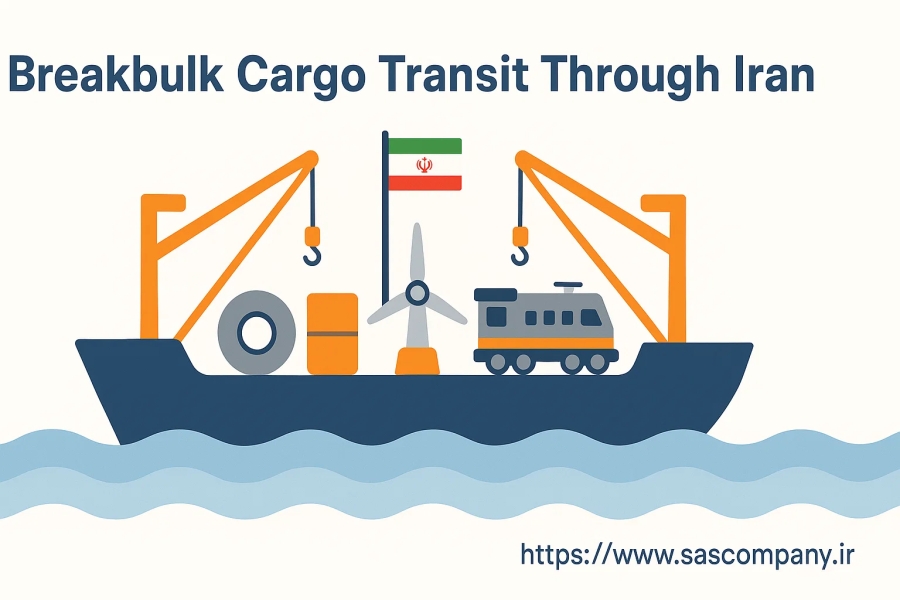
Breakbulk cargo refers to goods that are loaded individually onto a ship rather than being packed into standard intermodal containers or transported as bulk commodities.Typical examples include heavy machinery, steel coils, wind turbine blades, yachts, locomotives, timber, and project cargo — items that often require a project cargo and OOG transport service when they are too large, heavy, or irregularly shaped for containerization.
Unlike container shipping (which relies on standardized 20ft and 40ft boxes) and dry or liquid bulk shipping (such as grain, coal, or oil carried loose in the hold), breakbulk requires piece-by-piece handling. Each unit is lifted on and off the vessel separately using the ship’s cranes or shore-based heavy-lift gear, then carefully stowed and secured in the hold or on deck.
- Key characteristics of breakbulk cargo:
- Individual handling and stowage of each piece
- High flexibility for oversized and heavy lifts
- Requires specialized vessels (multi-purpose, heavy-lift, or project cargo ships) equipped with powerful cranes (often 100–1,000+ tons capacity)
- More labor-intensive and time-consuming in port compared to container operations
- Higher risk of damage, therefore needs expert lashing and securing
Although containerization has captured much of the general cargo market since the 1970s, breakbulk remains essential for project cargo, heavy industry, and commodities that simply do not fit into a box.
Advantages and Challenges of Shipping Breakbulk Cargo via Iran (2025 Perspective)
Iran’s geographical position at the crossroads of the Middle East, Central Asia, and the Caucasus still offers certain strategic advantages for specific breakbulk trade flows — particularly for shipments destined to Iraq, Afghanistan, Armenia, Azerbaijan, Turkmenistan, and landlocked Central Asian countries.
Key advantages of breakbulk cargo transit through Iran include:
- Relatively short sea + land distances for project cargo heading to the above markets compared to routing via Jebel Ali or Turkish ports.
- Availability of Iranian-flag heavy-lift and multipurpose vessels that are not affected by Western sanctions in the same way.
- Well-developed north–south rail corridor (Incheh Borun – Garmsar – Bafgh – Bandar Abbas) suitable for oversized cargo.
- Competitive freight rates on sanctioned routes where mainstream carriers do not operate.
However, shippers must also consider significant challenges:
- U.S. and EU sanctions severely restrict the involvement of most international shipowners, banks, P&I clubs, and insurers
- Limited availability of Western-flag heavy-lift tonnage; most vessels calling Iranian ports are older or sanctioned-fleet
- Payment and Letter of Credit issues for non-Iranian companies
- Higher insurance premiums
Major Ports in Iran Handling Breakbulk Shipments
Iran’s maritime infrastructure plays a vital role in facilitating breakbulk cargo transit through Iran, supporting oversized or irregular items like machinery, steel, and project equipment. Despite international sanctions, several ports manage significant volumes of non-oil cargo, contributing to regional trade toward Iraq, Afghanistan, and Central Asia. The main ports handling breakbulk shipments are:
1. Port of Bandar Abbas
Bandar Abbas, on the southern coast along the Persian Gulf, is Iran’s primary commercial gateway. The port accommodates breakbulk cargo via multipurpose berths and heavy-lift equipment, enabling efficient handling of industrial and construction goods. Its strategic location and connections to road and rail networks allow a road freight service for inland delivery to move breakbulk cargo toward Iraq, Afghanistan, and Central Asia.
2. Port of Shahid Rajaee
Adjacent to Bandar Abbas, Shahid Rajaee is Iran’s main container hub, but it also provides dedicated breakbulk facilities. Multipurpose berths and warehouse areas support heavy and irregular cargo, while highway and rail access facilitate inland transport. The port has proven its capacity to handle complex shipments despite occasional operational challenges.
3. Port of Bandar Imam Khomeini
Located in Khuzestan province, this river port primarily serves bulk and petrochemical shipments but also offers multipurpose berths for general cargo, including breakbulk items. Its infrastructure supports efficient handling and storage of industrial goods, with access to regional road and rail networks.
4. Port of Chabahar
Chabahar, on the Gulf of Oman, provides strategic access to international shipping lanes and serves as a gateway to Central Asia and Afghanistan via the International North-South Transport Corridor (INSTC). The port accommodates breakbulk shipments alongside container traffic, offering facilities for multipurpose and heavy-lift cargo.
In summary, Iran’s key southern ports—Bandar Abbas, Shahid Rajaee, Bandar Imam Khomeini, and Chabahar—provide reliable infrastructure for breakbulk cargo transit through Iran. Engaging local operators and leveraging multimodal transport links ensures efficient and secure movement of oversized or irregular cargo while navigating logistical and regulatory challenges.
Break Bulk Cargo Examples Commonly Shipped Through Iran
Break bulk cargo examples commonly shipped through Iran include:
Steel Coils, Plates & Beams
One of the largest breakbulk flows involves steel products. In 2024–2025, about 1.8 million tons of steel coils, plates, and beams were imported from China and India via Bandar Abbas and Shahid Rajaee ports. These shipments typically travel on multipurpose vessels with heavy-lift gear, carefully stowed and lashed to ensure safe handling.
Railway Locomotives & Wagons
Rail locomotives, passenger coaches, and freight wagons are also commonly shipped as breakbulk. While exact volumes are not publicly disclosed, Iran handles these oversized rail vehicles for domestic rail projects and regional exports.
Power Plant & Substation Equipment
Transformers, turbines, generators, and switchgear for domestic power plants and regional projects represent another significant category of breakbulk cargo. Specialized ports and heavy-lift facilities accommodate these large components efficiently.
Mining & Construction Machinery
Mining trucks, excavators, and other construction machinery move through Iran as breakbulk cargo, often destined for projects in Afghanistan, Tajikistan, and Central Asia. Handling requires multipurpose berths and experienced logistics operators.
Renewable Energy & Oil/Gas Equipment
Wind turbine blades, nacelles, tower sections, and oil-and-gas infrastructure such as drilling rigs and long pipes are increasingly shipped via breakbulk. Ports like Bandar Imam Khomeini and Chabahar provide facilities for these oversized modules.
In summary, the majority of breakbulk cargo transit through Iran consists of steel, heavy machinery, and industrial project equipment. Leveraging experienced local operators and multimodal transport ensures safe and efficient shipment of these high-value and oversized items.
Key Breakbulk Shipping Routes via Iran
Several key routes for breakbulk cargo transit through Iran are commonly used for oversized and heavy-lift shipments, each with its own transit time, cost considerations, and geopolitical risks.
China → Bandar Abbas → Iraq/Afghanistan
This is the most common route for steel, industrial machinery, and project equipment. Cargo arrives through a sea freight service to Iranian ports such as Bandar Abbas and is transported onward by truck or rail to Iraq and Afghanistan. Transit time for sea passage typically ranges from 20 to 30 days, with additional inland transport depending on the destination. While relatively cost-effective for heavy cargo, shippers face increased insurance premiums and regulatory scrutiny due to international sanctions.
India → Chabahar → Afghanistan (INSTC Corridor)
Chabahar Port provides a strategic link for shipments from India via the International North–South Transport Corridor. This multimodal route combines sea and rail transport, offering an alternative to the Strait of Hormuz. Sea transit takes around 20–25 days, with an additional 3–5 days for inland rail transport within Iran. The route is efficient for time-sensitive project cargo, though coordination between multiple transport modes and customs procedures can pose challenges.
Black Sea/Turkey → Amirabad/Anzali → Central Asia (Caspian Route)
Cargo arriving from the Black Sea or Turkish ports can transit through Iran via Caspian Sea connections to Amirabad or Anzali ports. This route is used less frequently but offers an alternative for shipments seeking to bypass southern Persian Gulf ports. Transit is longer and costs are relatively higher due to multiple handling stages, and shippers must navigate border and customs requirements.
Europe → Constanta → Caspian → Amirabad/Bandar Abbas
A rare but growing route for specialized breakbulk shipments connects European ports to Iran via the Caspian Sea. While offering a way to access Iranian and Central Asian markets, this route involves complex multimodal transfers, higher costs, and increased political and regulatory risks.
In summary, these corridors illustrate the diverse options for breakbulk cargo transit through Iran, balancing speed, cost, and geopolitical considerations. Choosing the optimal route requires careful planning, experienced local partners, and awareness of sanctions and insurance implications.
Customs Clearance and Documentation for Breakbulk Cargo in Iran
Successful breakbulk cargo transit through Iran heavily depends on correct and complete customs documentation and the right local partners. The process differs from standard container clearance in several ways:
Required Core Documents (always needed)
- Commercial Invoice (in English + Persian translation often requested)
- Packing List / Stowage Plan (very detailed for breakbulk – weight and dimensions of each piece)
- Original Bill of Lading (or Seawaybill for certain Iranian-flag vessels)
- Certificate of Origin (chamber-stamped)
- IMO Dangerous Goods Declaration (if applicable)
- Import Permit / License from relevant Iranian ministry for restricted or project cargo (e.g., Ministry of Industry, Mine & Trade or Ministry of Roads)
Additional Documents Frequently Requested
- Fumigation Certificate (for timber & wooden dunnage)
- Pre-inspection Certificate (SGS, Bureau Veritas or Iranian equivalent)
- Temporary Admission Carnet (ATA or Tehran Carnet) for re-export cargo or exhibition equipment
- Insurance Certificate issued through a cargo insurance service acceptable in Iran.
Key Practical Points for breakbulk cargo transit through Iran
- Clearance is noticeably faster in Special Economic Zones (Shahid Rajaee, Chabahar, Bandar Imam SEZ, Anzali Free Zone) because duties and taxes can be suspended or reduced.
- For transit cargo to Afghanistan, Iraq or Central Asia, the T-1 transit declaration system is used – goods remain under customs bond until exit.
- Almost all international shippers work through licensed Iranian customs brokers. Direct clearance by foreign forwarders is legally impossible.
- Because of banking sanctions, most brokers and shipping lines require pre-payment in Rials or through exchange houses in Dubai, Istanbul or Oman.
- Cargo description must be extremely accurate. Any discrepancy between documents and actual pieces almost always causes delays and fines.
Recommended Workflow for Foreign Shippers
- Appoint an experienced Iranian customs broker before the vessel arrives.
- Send all documents in PDF at least 7–10 days before ETA.
- Use the EPL/IRISL portal or broker’s system for pre-arrival declaration.
- Prepare for possible physical inspection of heavy lifts and project cargo.
- Keep a buffer of several extra days in the schedule – especially outside SEZs.
How to Choose the Right Breakbulk Carrier for Breakbulk Cargo Transit in Iran
Selecting the right carrier is critical for successful breakbulk cargo transit through Iran. Shippers must evaluate vessel capabilities, route expertise, and compliance with international sanctions. Key factors include the carrier’s heavy-lift fleet, gearless vs. geared vessels, experience handling oversized or project cargo, and knowledge of Iran’s customs and port procedures. Licensed Iranian operators or internationally sanctioned-compliant companies offer smoother transit, reduced delays, and lower risk of demurrage. Among reliable options, SASCO stands out as a specialized carrier with expertise in Iran-focused logistics, providing both tailored shipping solutions and support for multimodal transit to Iraq, Afghanistan, and Central Asia. Partnering with an experienced carrier like SASCO ensures your breakbulk shipments are handled efficiently, safely, and in full compliance with regional regulations.