

What Importers Should Know About Freight to Iran
Before arranging freight to Iran, importers should focus on four practical questions: which freight method fits the cargo, what documents must be prepared, how customs clearance may affect timing, and which costs are likely to appear beyond the initial quote. In many cases, problems in shipping to Iran come less from transport availability and more from weak preparation in these areas.
For businesses importing to Iran, the right decision depends on cargo value, shipment size, delivery urgency, and clearance requirements. Companies that plan to send cargo to Iran should compare air, sea, land, and rail not only by transit time, but also by documentation burden, handling needs, customs exposure, and total shipping costs to Iran. Looking at these factors early helps reduce delays, extra charges, and avoidable operational risk.
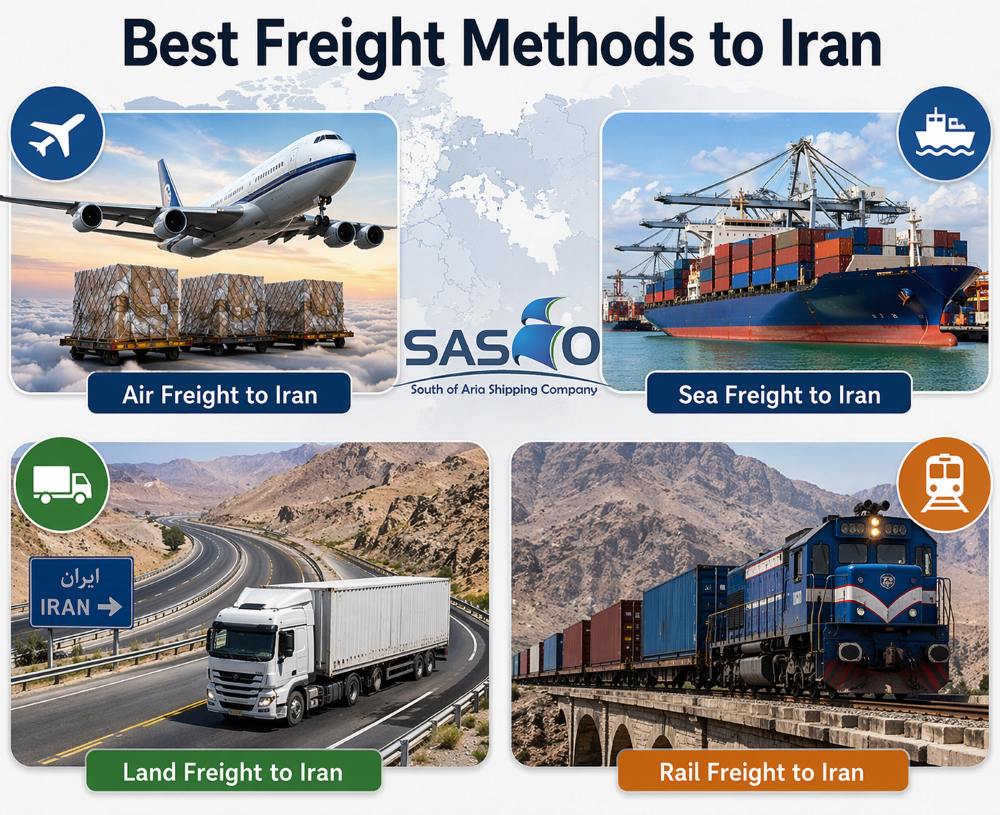
How Importers Compare Freight Methods to Iran
When comparing freight to Iran, the right option depends on cargo value, shipment size, delivery urgency, and how much flexibility the importer needs.
Air Freight to Iran
Air freight to Iran is usually the best choice for urgent, high-value, or time-sensitive cargo such as electronics, medical supplies, or critical spare parts, because it offers the fastest transit and more controlled handling, although the cost per kilogram is higher and chargeable weight matters more.
Sea Freight to Iran
For heavier, bulkier, or less urgent shipments, sea freight to Iran is generally the most economical solution. It is better suited to machinery, raw materials, containerized commercial cargo, and other shipments where lower unit cost matters more than speed. For importers, this is often the practical option when the cargo volume is high and the delivery window is more flexible.
Land Freight to Iran
If the shipment is regional or needs more direct inland movement, land freight to Iran can be a strong option. Road transport works well for cargo moving from nearby countries or across connected trade corridors, especially when importers need flexible pickup and delivery, easier route adjustments, or faster movement than ocean freight on shorter regional lanes. It is often suitable for palletized goods, industrial products, retail cargo, and shipments that benefit from door-to-door coordination.
Rail Freight to Iran
Rail freight to Iran is usually the better fit for medium-to-large shipments that do not require air speed but still need more structure and cost control than some road moves. It can work well for containerized cargo, industrial materials, and a multimodal transport service where predictable corridor movement is important. For businesses importing to Iran or planning to send cargo to Iran on a commercial basis, rail is often most useful when the shipment can move on established regional routes and timing is steady rather than urgent.
In short, shipping to Iran by air is best for speed, sea for volume and cost efficiency, land for regional flexibility, and rail for structured medium- to large-scale cargo flows. The best method is the one that matches the cargo, timeline, and clearance plan together, not just the quoted freight rate.
Quick Decision Guide for Importers
| Best method |
shipment need |
| air |
urgent, high-value cargo |
| sea |
heavy/bulky, lower urgency |
| land |
nearby origins / regional deliveries |
| rail |
medium-large, structured corridor flow |
How to Choose the Right Freight Method for Iran
For freight to Iran, importers should compare urgency, cargo profile, total cost exposure, and handling requirements before selecting a method. In many cases, the wrong choice does not come from poor transport availability, but from evaluating only one factor and ignoring the others.
Transit Time and Urgency
The first question is whether the shipment has a fixed delivery deadline or simply a preferred arrival window. If the cargo is tied to production continuity, urgent replenishment, medical use, or time-sensitive commercial commitments, speed becomes a priority and the importer may need a faster freight solution.
If the shipment is part of regular stock planning or can move within a wider delivery window, a slower method may be more efficient and commercially safer. For shipping to Iran, urgency should be measured not only by transit time, but also by how much delay the business can realistically absorb.
Cargo Volume, Weight and Dimensions
Importers should also evaluate how the physical profile of the shipment affects freight feasibility. Small, compact, and high-value cargo is easier to justify under faster transport conditions, while heavy, oversized, or high-volume cargo usually requires a method that can absorb larger shipment size more efficiently.
This is especially important when importing to Iran, because the most suitable method often changes once shipment dimensions, chargeable weight, pallet count, or container needs are reviewed in detail. Choosing a freight method before checking these figures can quickly distort the actual cost.
Budget and Cost Sensitivity
A low freight rate does not always mean a lower total shipping cost. Importers should compare the full cost impact of each option, including freight charges, customs-related expenses, handling, storage risk, insurance, and possible delay costs.
In some cases, a faster method is commercially justified because it protects inventory flow or reduces operational disruption. In other cases, the better decision is the one that lowers the total landed cost even if transit is slower. Businesses planning to send cargo to Iran should therefore assess cost sensitivity in relation to the value of time, not just the freight quote itself.
Cargo Type and Handling Requirements
The final decision should reflect the nature of the cargo. Fragile, high-value, controlled, hazardous, temperature-sensitive, or irregularly packed goods may require a method that offers tighter handling conditions, fewer transfer risks, or more suitable equipment. Standard commercial cargo with stable packaging and lower handling sensitivity usually allows more flexibility in method selection. For Iran-bound commercial shipments, this means the best option is often the one that protects the cargo condition, supports documentation and clearance, and fits the handling profile of the shipment from origin to delivery.
Documents Importers Should Prepare Before Shipping to Iran
The document set for freight to Iran usually includes a small group of core shipping papers, plus a few additional documents depending on the cargo, payment setup, and product category.
- Commercial Invoice — the main commercial document showing the seller, buyer, goods, quantity, value, and trade terms.
- Packing List — used to show how the cargo is packed, including package count, weight, and dimensions.
- Transport Document —this depends on the freight mode: Bill of Lading for sea freight service, Air Waybill for air freight, and equivalent transport documents for road or rail shipments.
- Certificate of Origin — often required to confirm the origin of the goods and support the shipment file.
- Proforma Invoice / Approved Import Order — for many import cases, the shipment file may also need a proforma invoice and an approved import order or order-registration document.
- Import Permits and Product-Specific Supporting Documents — depending on the goods, importers may need permits, inspection or conformity certificates, and health, safety, or phytosanitary documents.
- Insurance or Bank Documents, if applicable — some shipments also require an insurance certificate or payment-related bank documents, especially in structured commercial imports.
In short, the core documents for shipping to Iran are the commercial invoice, packing list, certificate of origin, and the relevant transport document, while import permits, proforma papers, insurance, inspection certificates, and bank documents may also be needed depending on the shipment.
What Importers Should Know Before Customs Clearance in Iran
Preparing Shipment and Product Details
Before a shipment to Iran reaches the clearance stage, importers should make sure the shipment details are fully aligned. In practice, that means confirming the product description, HS classification, origin, declared value, and import setup in advance, rather than leaving these points to be corrected later. For imports into Iran, pre-clearance preparation commonly includes order registration through the National Trade Single Window and checking whether the product needs any additional approvals.
Submitting Customs Documentation
Once the shipment is ready for clearance, the importer or broker submits the customs file electronically and provides the supporting shipping documents. At this stage, customs reviews the declaration, shipment data, and document consistency, so the main objective is to make sure the file matches the cargo exactly. Errors in product description, value, origin, or document alignment can slow down shipping to Iran even when the transport itself has been arranged correctly.
Duties, Taxes and Inspections
After submission, customs assesses the shipment for duties, taxes, and possible inspection requirements. These charges are generally linked to the product’s HS code and customs value, while inspections may be documentary or physical depending on the goods and the level of review required. For businesses importing to Iran, this is the stage where classification accuracy and complete documentation matter most, because both duty calculation and inspection exposure depend on them.
Release of Cargo
Cargo is released after customs formalities are completed and the applicable duties, taxes, and related charges are settled. Once that happens, the shipment can move out of customs control and continue to final delivery. For companies planning to send cargo to Iran, the clearance process is usually smoother when product data, supporting documents, and import requirements are checked before arrival rather than corrected after the shipment is already waiting at the port, airport, or border.
Because customs clearance involves multiple checkpoints, many importers prefer to work with a freight forwarder that can coordinate the shipment file, provide a customs clearance service, support document accuracy, and follow the process through to cargo release.
For a more detailed overview of customs rules, procedures, and compliance requirements, see our guide to Iran customs regulations.
Main Cost Factors for Freight to Iran
- Freight method and route — The cost of freight to Iran depends heavily on whether the shipment moves by air, sea, land, or rail. Route length, transit corridor, and origin point can all change the final rate.
- Weight, volume and chargeable weight — Freight pricing is often based on both actual weight and shipment volume. For bulky cargo, chargeable weight can increase the total cost even when the goods are relatively light.
- Customs duties and clearance costs — Importers should include duties, taxes, customs-related fees, and document processing costs when estimating total shipping costs to Iran.
- Packaging, insurance and handling — Stronger packaging, cargo insurance, and special handling requirements can all add to the freight budget, especially for fragile or high-value goods.
- Storage, delays and extra charges — Storage fees, border delays, document corrections, and demurrage can increase the final landed cost beyond the original freight quote.
Many avoidable freight costs come from planning errors rather than the transport method itself. Importers that want to reduce delays, document problems, and extra charges can also review our guide on common shipping mistakes to Iran.
Restricted and Prohibited Goods for Shipping to Iran
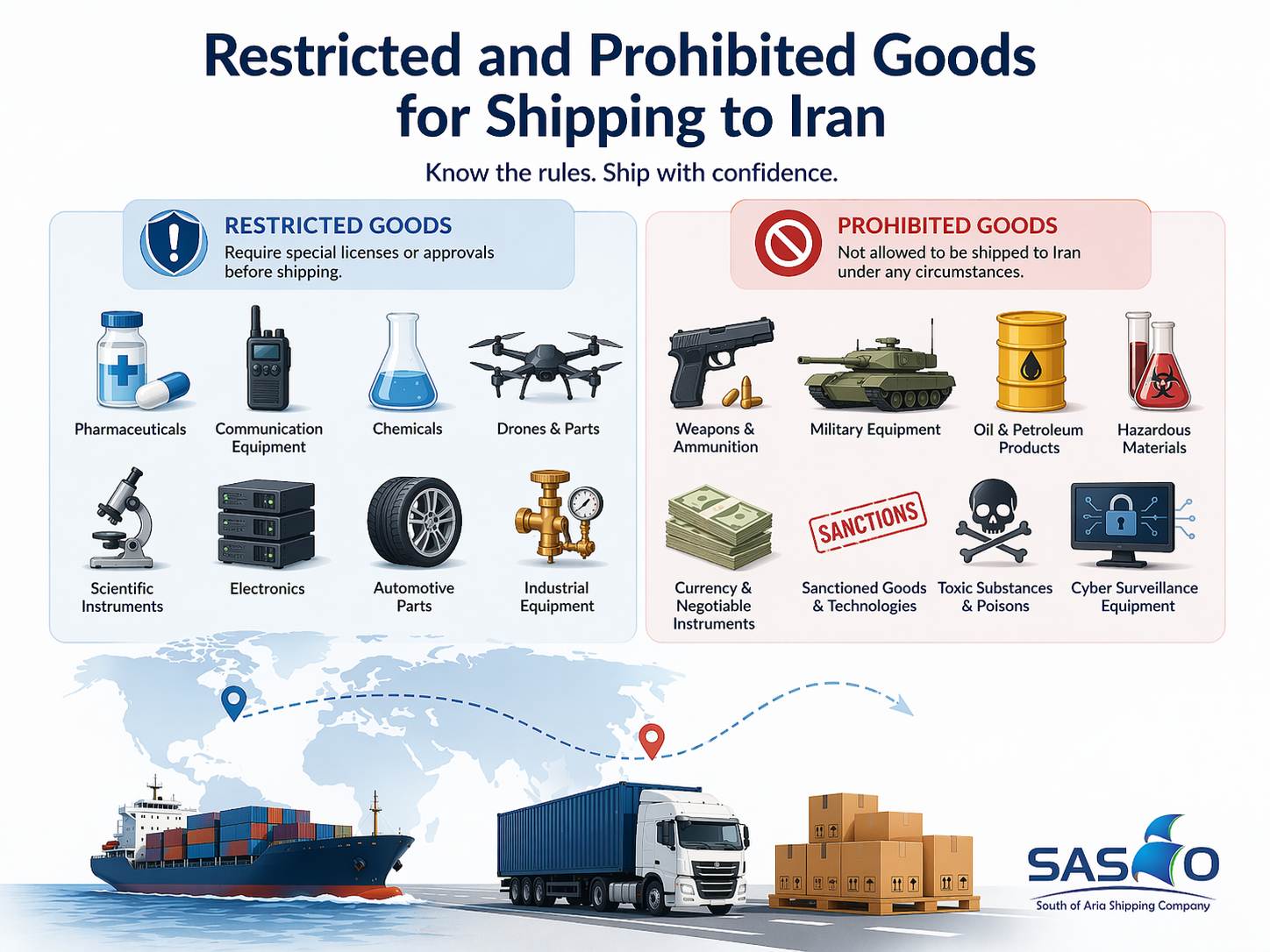
Goods That May Require Permits
Some goods can be shipped only after additional approvals or supporting certificates are secured. For shipping to Iran, this often applies to categories such as food products, pharmaceuticals, agricultural goods, and some telecommunications equipment, where importers may need a licence, authorisation, or product-specific certificate before the shipment is booked.
Goods That Are Commonly Restricted
Certain products may be restricted or prohibited depending on their nature, end use, or the regulations that apply to them. In practice, importers should treat alcohol as a clear prohibited example under Iranian law, while controlled technical goods and some sanctioned or restricted items may also fall outside normal shipping conditions.
Why Importers Should Verify Restrictions Before Booking
Checking cargo eligibility before dispatch through an import & export consulting service is one of the simplest ways to avoid problems later. Restrictions can affect documentation, approvals, routing, timing, and final cost, and goods sent without the right permissions may be delayed, held, or refused during the import process.
Why Importers Work with a Freight Forwarder for Iran Shipments
Many importers choose to work with a freight forwarder when planning shipments to Iran, especially when the cargo requires route planning, document alignment, and coordination before customs clearance. For commercial shipments, the right support can help reduce avoidable delays, document errors, and unnecessary cost exposure.
If you are planning freight to Iran, SASCO helps importers choose the right shipping method, prepare the required documents, and manage each stage of the shipment with greater confidence.
FAQs About Freight to Iran
What is the best shipping method to Iran for importers?
The best shipping method depends on the cargo type, delivery urgency, shipment size, and total cost exposure. Air freight service is usually more suitable for urgent or high-value cargo, while sea, land, or rail may be more practical for larger, less time-sensitive, or regionally routed shipmen
What documents are required for shipping to Iran?
In most cases, importers need a commercial invoice, packing list, transport document, and certificate of origin. Depending on the product and import structure, the shipment may also require permits, inspection certificates, insurance documents, or import-order-related paperwork.
How much does freight to Iran cost?
Freight costs to Iran depend on the shipping method, route, cargo dimensions, weight, and handling requirements. Importers should also consider customs duties, clearance-related charges, storage risk, insurance, and other costs that may appear beyond the initial freight quote.
How long does customs clearance in Iran take?
Customs clearance time in Iran depends on document accuracy, cargo classification, permit requirements, and whether the shipment is selected for inspection. In many cases, delays happen because of incomplete paperwork or mismatches in product description, value, or supporting documents.
Can restricted goods be shipped to Iran?
Some restricted goods can be shipped, but only when the required permits or approvals are in place before dispatch. Other goods may be prohibited or subject to strict control, so importers should always verify cargo eligibility before booking the shipment.
Is air, sea, land or rail freight better for my cargo?
That depends on how quickly the cargo is needed, how large the shipment is, and how sensitive it is to cost and handling conditions. For importers, the right method is usually the one that fits the cargo profile, delivery plan, and customs readiness together rather than speed alone.