

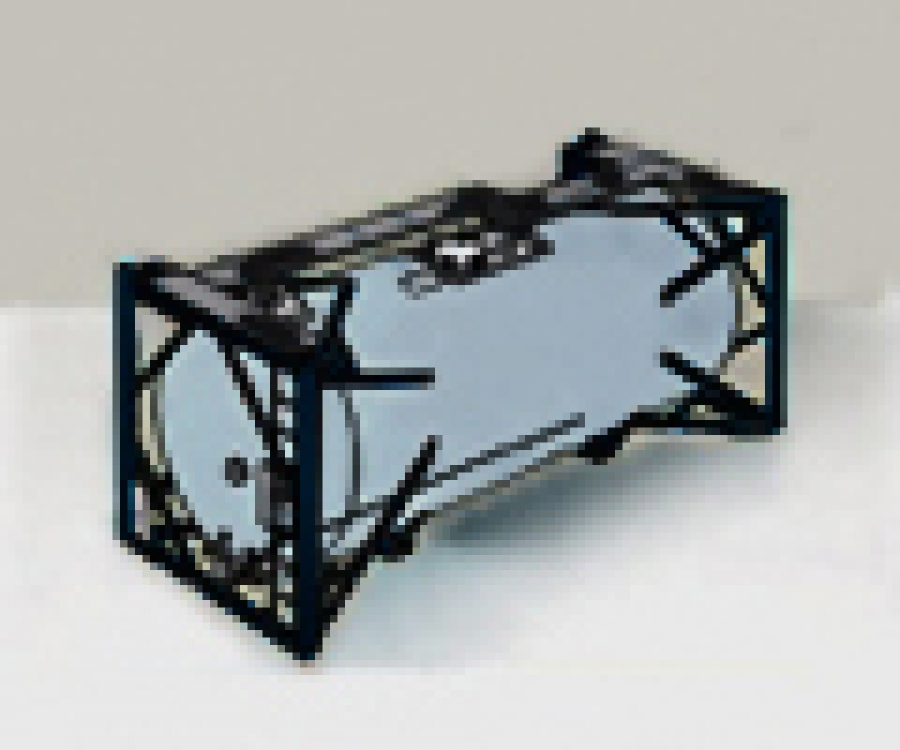
20' Tank Container Specifications
| Specification | Value |
|---|---|
| ISO Frame Length | 6.058 m |
| ISO Frame Width | 2.438 m |
| ISO Frame Height | 2.438 m |
| Door Width | Not applicable |
| Door Height | Not applicable |
| Nominal Tank Capacity | Varies by tank design |
| Tare Weight | 4,190 kg |
| Maximum Cargo Weight | 26,290 kg |
Door dimensions and enclosed cubic capacity are not applicable because an ISO tank has no conventional container doors or rectangular enclosed cargo space. Liquid capacity must be taken from the identification plate and technical documents of the specific tank. Frame dimensions, volume, tare weight, and payload may vary by manufacturer and unit.
Common Liquid Cargo Types
Depending on its certification and construction, a tank container may carry suitable food-grade liquids such as fruit juice and edible oils. Other tanks are designed for specific chemicals or regulated hazardous liquids. A tank previously used for one product is not automatically suitable for another.
Liquid shipments may be coordinated through freight forwarding services, but dangerous goods remain subject to classification, documentation, route restrictions, carrier approval, and national and international regulations. Additional background is available in SASCO's guide to dangerous goods transport through Iran.
Filling Level and Safety Notes
General tank-container guidance commonly specifies a filling level of at least 80% to reduce dangerous surge and usually no more than 95% so sufficient ullage remains for thermal expansion. These percentages are not universal booking instructions. The permitted filling ratio depends on cargo density, expansion characteristics, tank type, expected temperature range, regulations, and technical assessment.
Overfilling can remove necessary expansion space, while excessive empty space may increase liquid movement during transport.
Tank Container vs Bulk Container
A 20' bulk container is designed for loose dry commodities such as grain, seeds, spices, or powder. A tank container carries compatible liquids inside a sealed vessel. The two units use different loading systems, cleaning procedures, safety controls, and regulatory requirements.
Important Regulatory Notes
Before loading, the shipper should confirm cargo classification, tank code, material compatibility, previous cargo, cleaning certificate, valve condition, seals, filling ratio, documentation, and emergency information. Food-grade tanks must meet the required hygiene and cargo-history controls.
Hazardous liquid transport must be handled under applicable dangerous-goods rules and carrier acceptance. No liquid should be assigned to a tank based only on general container dimensions.
For tank selection and shipment planning, you can contact SASCO or request a shipping quotation by providing the product name, safety data sheet where applicable, quantity, density, temperature, origin, destination, and regulatory status.
Frequently Asked Questions
What is a 20' tank container used for?
It is used for compatible liquid cargo, including approved food-grade liquids and certain industrial or regulated chemical products.
What liquids can be transported in a tank container?
Only liquids compatible with the specific tank design, certification, lining, valves, previous cargo history, and applicable regulations.
Why should tank containers not be completely full?
Ullage is required to allow liquid expansion as temperature changes. The exact permitted filling level must be calculated for the specific cargo and tank.
What is the difference between a tank container and a bulk container?
A tank container carries liquids inside a sealed vessel, while a bulk container carries loose dry commodities using roof and discharge hatches.