


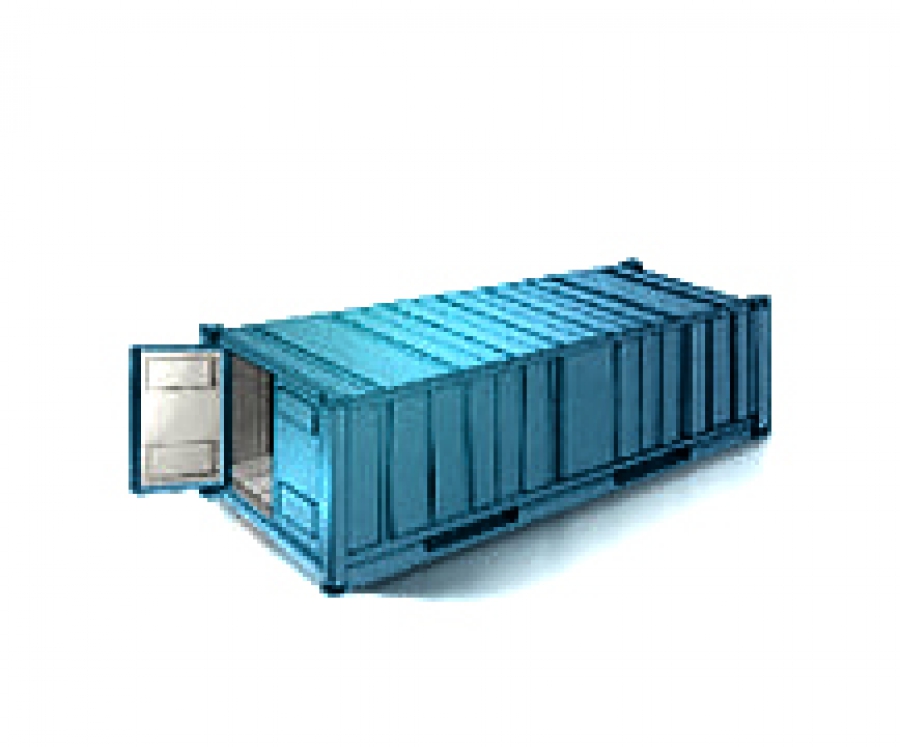
40' Reefer Container Specifications
| Specification | Value |
|---|---|
| Inside Length | 11.840 m |
| Inside Width | 2.286 m |
| Inside Height | 2.120 m |
| Door Width | 2.286 m |
| Door Height | 2.195 m |
| Capacity | 60 m3 |
| Tare Weight | 3,850 kg |
| Maximum Cargo Weight | 26,630 kg |
These specifications are general reference values. Actual internal dimensions, payload, refrigeration capability, ventilation settings, and equipment configuration may vary by manufacturer, carrier, and individual container.
Common Applications in Cold Chain Logistics
A 40' reefer container is commonly selected for high-volume shipments of frozen products, fresh fruit and vegetables, meat, seafood, dairy products, pharmaceutical goods, horticultural cargo, and other commodities whose quality depends on stable transport conditions.
These shipments are normally managed within a broader cold chain logistics process. In addition to container selection, this may involve route planning, documentation, customs coordination, reefer power arrangements, monitoring, inland refrigerated transport, and controlled delivery.
For ocean transport, refrigerated equipment planning may also be coordinated through sea freight services, depending on carrier availability, port connections, transit time, and destination requirements.
40' Reefer vs 20' Reefer Container
The main difference between a 40' reefer and a 20' refrigerated container is usable cargo volume. A 40ft reefer is generally more appropriate for larger commercial loads, while a 20ft unit may be better for smaller quantities or shipments where compact equipment is preferred.
The larger size does not automatically make the 40ft unit suitable for every cargo. Product weight, packaging dimensions, pallet arrangement, airflow, route restrictions, and available equipment must also be considered. Dense cargo may reach weight limits before the entire internal volume is used.
Temperature, Pre-Cooling and Airflow Notes
Refrigerated containers maintain the selected transport conditions by circulating conditioned air through the cargo space. Correct airflow is essential because blocked floor channels, tightly packed cartons, or cargo loaded above permitted lines can create uneven temperature distribution.
Packaging and stowage should therefore be planned according to the commodity. Chilled products often require airflow through and around the packages, while frozen cargo may use a different loading pattern. Cargo should normally be brought to its prescribed carrying temperature before loading, because a reefer unit is primarily designed to maintain product temperature rather than remove a large amount of field heat.
Pre-cooling the empty container is not automatically recommended in every situation. It should follow the carrier's operating procedure and may be appropriate when loading takes place directly from a temperature-controlled facility. Incorrect pre-cooling in warm, humid conditions may cause condensation when the doors are opened.
The required set point, ventilation, humidity, product temperature, loading pattern, power supply, alarms, and monitoring arrangements should be confirmed before departure. Temperature readings should also be interpreted together with the location of the sensors and the normal operating cycles of the reefer unit.
For 40ft reefer selection and cold chain shipment planning, you can contact SASCO or request a shipping quotation by sharing the commodity, cargo volume, required temperature, packaging, origin, destination, and delivery schedule.
Frequently Asked Questions
What is a 40' refrigerated container used for?
It is used for larger-volume chilled or frozen shipments such as food products, fresh produce, pharmaceuticals, seafood, meat, dairy products, and agricultural cargo.
What cargo can be transported in a 40' reefer container?
It can transport suitable temperature-sensitive cargo whose required conditions fall within the operating capabilities of the selected equipment.
What is the difference between 20' and 40' reefer containers?
The main difference is internal cargo capacity. A 40ft reefer provides more space for larger shipments, while a 20ft reefer is generally more appropriate for smaller cargo volumes.
Why is airflow important in refrigerated containers?
Airflow distributes conditioned air throughout the cargo space. If airflow channels are blocked, temperatures may become uneven and product quality may be affected.