


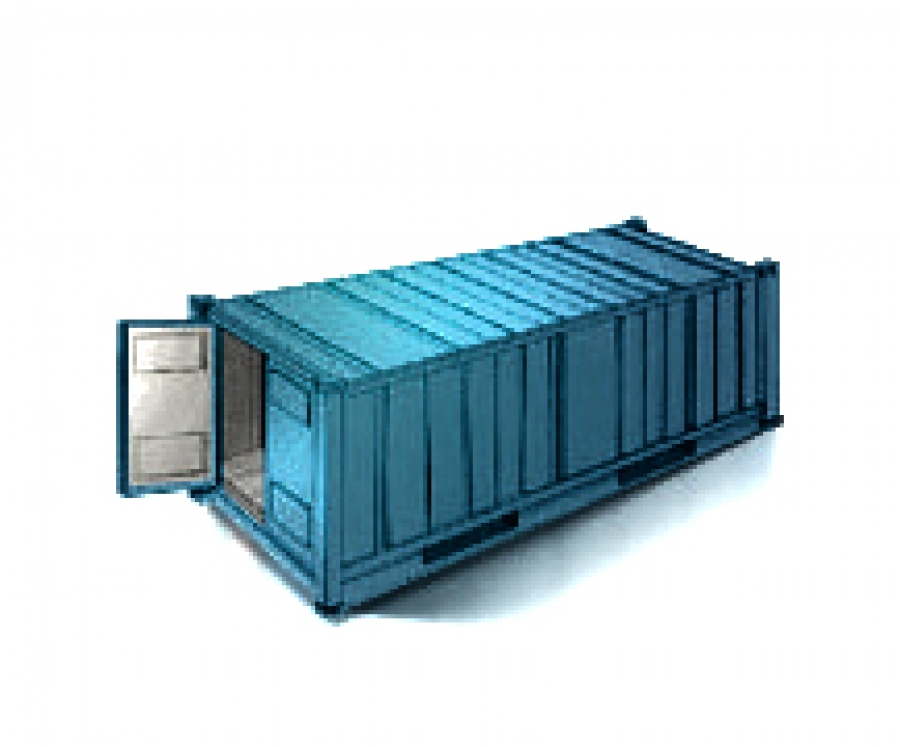
40' Standard Container Specifications
| Specification | Value |
|---|---|
| Inside Length | 12.029 m |
| Inside Width | 2.350 m |
| Inside Height | 2.392 m |
| Door Width | 2.340 m |
| Door Height | 2.292 m |
| Capacity | 67 m3 |
| Tare Weight | 3,780 kg |
| Maximum Cargo Weight | 26,700 kg |
Note: Container dimensions and weights may vary slightly depending on the manufacturer, container age, and shipping line specifications.
Common Uses in International Shipping
A 40' standard container is commonly used for general dry cargo such as consumer goods, packaged products, cartons, textiles, plastic goods, furniture components, industrial supplies, and palletized commercial shipments. It is widely used in sea freight and multimodal transport when shippers need more space for cargo while keeping the shipment inside a standard closed container.
40' Standard vs 20' Standard Container
The key difference between a 40' standard container and a 20' standard container is cargo volume. A 40ft container provides significantly more internal space, but it does not simply mean that it should always be used for heavier cargo. In many cases, a 20ft container is better for dense and heavy shipments, while a 40ft standard container is better for larger-volume dry cargo.
If the cargo is light but requires more vertical clearance, a 40' high-cube container may be more suitable than a 40' standard container. If the cargo requires top loading, temperature control, or out-of-gauge handling, another container type should be considered.
Important Loading Notes
Before using a 40' standard container, cargo volume, weight, packaging, pallet layout, door clearance, and route restrictions should be reviewed. Although the container offers more space, the maximum allowable cargo weight must still be respected. Uneven weight distribution can also create handling and transport risks.
For shipments combining sea, road, or rail movement, container planning may be coordinated with multimodal transport requirements or transit through Iran procedures.
Frequently Asked Questions
What is a 40' standard container used for?
It is used for general dry cargo that requires more internal volume, such as packaged goods, cartons, textiles, industrial supplies, and palletized shipments.
How much cargo can a 40' standard container carry?
The listed maximum cargo weight is 26,700 kg, but the practical loading limit may depend on cargo type, route regulations, shipping line rules, and inland transport restrictions.
When should I use a 40' container instead of a 20' container?
A 40' standard container is usually selected when cargo volume is more important than cargo density and the shipment needs more internal space.
Is a 40' standard container suitable for heavy cargo?
It can carry heavy cargo within the allowed weight limits, but very dense cargo is often better planned in a 20' standard container because of weight distribution and transport restrictions.